


Normal Delivery vs C-Section: Which is Safer?

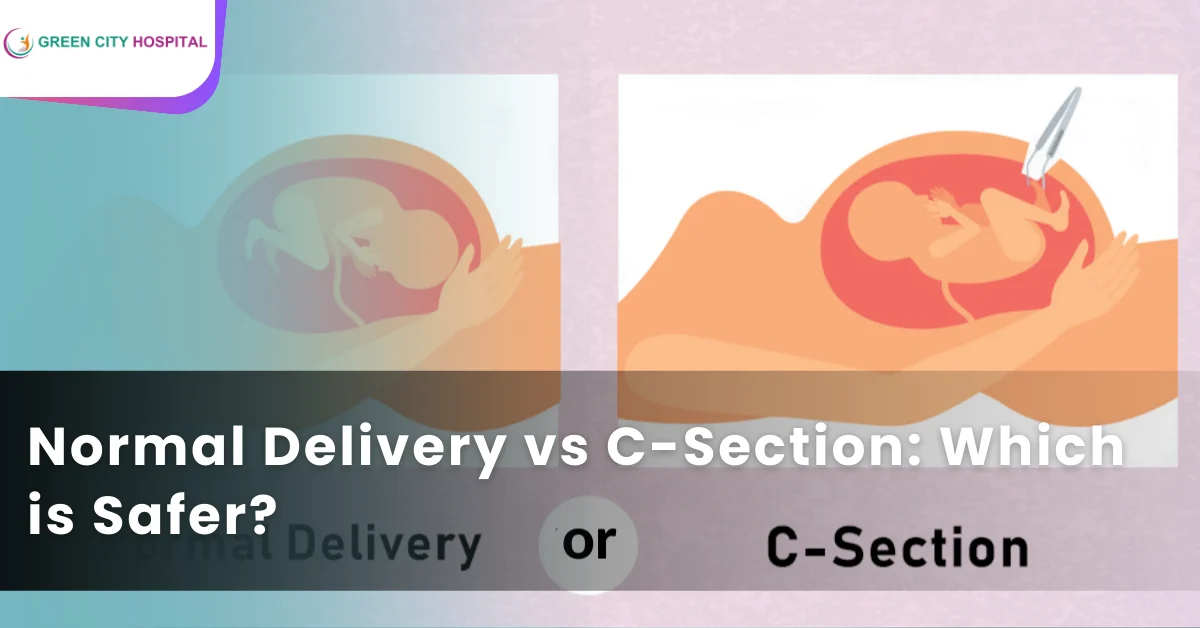
The moment you see those two pink lines on a pregnancy test, your world changes forever. Suddenly, you are not just thinking about yourself anymore; every decision you make revolves around the tiny life growing inside you. As you cross the milestones of the first and second trimesters, the third trimester brings a mix of excitement and anxiety. One of the most common debates that dominates drawing-room conversations and late-night internet searches is the ultimate question: Normal delivery vs C-section: which is safer?
If you are an expectant mother in India, you have likely been bombarded with unsolicited advice. Your grandmother might swear by the virtues of a natural, vaginal birth, while a friend who recently delivered might tell you how a planned Cesarean section saved her from hours of grueling labor pain. The truth, however, goes far beyond personal anecdotes.
At Green City Hospitals, we understand that childbirth is deeply personal. We also know that there is no one-size-fits-all answer to how a baby should be brought into the world. The safety of a delivery method depends entirely on the unique medical circumstances of the mother and the baby.
To help you make an informed, confident decision, let us break down the facts, benefits, risks, and realities of both normal deliveries and C-sections, specifically focusing on what matters most—your safety and your baby’s well-being.
Understanding Normal Delivery (Vaginal Birth)
For thousands of years, the human body has been naturally equipped to carry and deliver babies. A normal delivery, medically known as a vaginal birth, is the natural process of delivering a baby through the birth canal without any surgical intervention.
The Three Stages of Normal Delivery
- Labor and Effacement: This is the longest stage, where the cervix begins to soften, thin out (efface), and dilate to allow the baby to pass through. You will experience contractions that gradually become stronger and closer together.
- Pushing and Birth: Once the cervix is fully dilated (around 10 centimeters), the mother uses her energy to push the baby out through the birth canal.
- Delivery of the Placenta: Shortly after the baby is born, the uterus continues to contract mildly to expel the placenta.
The Benefits of a Normal Delivery
When we evaluate the “normal delivery vs c-section” debate, healthcare professionals universally agree that for an uncomplicated pregnancy, a vaginal birth is the safest and most preferred route. Here is why:
- Shorter Hospital Stay and Faster Recovery: Without a major surgical incision to heal, mothers who have a normal delivery are often up and walking within hours. The hospital stay is usually limited to 24 to 48 hours.
- Beneficial for the Baby’s Immune System: As the baby passes through the birth canal, they ingest beneficial bacteria (the maternal microbiome). This helps build their gut health and strengthens their immune system against allergies and asthma later in life.
- Better Respiratory Health for the Baby: The physical squeezing that occurs as the baby travels through the birth canal helps push fluid out of the baby’s lungs, reducing the risk of respiratory problems at birth.
- No Surgical Complications: A normal delivery avoids the risks associated with major surgery, such as severe bleeding, reactions to anesthesia, and post-operative infections.
- Easier Future Pregnancies: Women who deliver vaginally typically have fewer complications in subsequent pregnancies compared to those who have multiple C-sections.
The Risks and Challenges
While natural, vaginal birth is not without its hurdles.
- Perineal Tearing: The skin and tissues around the vagina may stretch and tear. While most tears are minor and heal quickly, some require stitches.
- Exhaustion: Labor can be unpredictable. It might last for a few hours or stretch over a day, leading to immense physical fatigue.
- Pelvic Floor Issues: The strain of carrying and pushing a baby can sometimes weaken pelvic floor muscles, temporarily leading to minor urinary incontinence.
Understanding C-Section (Cesarean Delivery)
A Cesarean section, or C-section, is a surgical procedure used to deliver a baby through incisions made in the mother’s abdomen and uterus. While it was historically used only as a last-resort life-saving measure, advancements in modern medical science have made it a remarkably safe and common procedure today.
Planned vs. Emergency C-Sections
It is crucial to differentiate between the two types of Cesarean deliveries:
- Planned (Elective) C-Section: This is scheduled in advance when medical indications show that a vaginal birth might pose a risk to the mother or baby.
- Emergency C-Section: This occurs when a woman goes into labor intending to have a normal delivery, but unforeseen complications arise (such as the baby’s heart rate dropping or labor completely stalling), making immediate surgery necessary to save lives.
Why Might a Doctor Recommend a C-Section?
At Green City Hospitals, our primary goal is a healthy mother and a healthy baby. We only recommend a C-section when medically justified. Some common reasons include:
- Fetal Distress: If the baby is not getting enough oxygen during labor.
- Abnormal Positioning: If the baby is in a breech position (feet or buttocks first) or transverse (sideways) and cannot be turned.
- Placenta Previa: A condition where the placenta covers the cervix, blocking the baby’s exit route.
- Multiple Pregnancies: Carrying twins, triplets, or more often necessitates a surgical delivery depending on the babies’ positions.
- Cephalopelvic Disproportion (CPD): When the baby’s head is too large to pass safely through the mother’s pelvis.
- Maternal Health Conditions: Issues like severe preeclampsia (high blood pressure) or maternal infections like HIV or active genital herpes.
The Benefits of a C-Section
- Life-Saving Intervention: In high-risk situations, a C-section is the safest, most immediate way to rescue a baby and mother from life-threatening distress.
- Predictability: For planned C-sections, knowing the exact date and time of delivery can reduce anxiety for some mothers.
- Avoidance of Birth Trauma: It eliminates the risk of the baby suffering oxygen deprivation from prolonged, stalled labor or suffering physical injuries like shoulder dystocia (where the baby’s shoulder gets stuck).
The Risks and Disadvantages
Because a C-section is a major abdominal surgery, it carries inherent surgical risks:
- Longer Recovery Time: Healing from a C-section takes significantly longer than a normal delivery. You can expect a hospital stay of 3 to 4 days and a recovery period of 4 to 6 weeks at home.
- Surgical Risks: These include heavy blood loss, infection at the incision site, and the rare risk of blood clots.
- Impact on Future Pregnancies: Having a C-section increases the risk of complications in future pregnancies, such as placenta accreta (where the placenta attaches too deeply into the uterine wall) or uterine rupture during a future vaginal birth attempt.
- Delayed Milk Production: Sometimes, the trauma of surgery and the lack of natural labor hormones can cause a slight delay in the onset of breast milk production.
Normal Delivery vs C-Section: Which is Safer?
Now we return to the core question: Which is safer?
The most scientifically accurate answer is: For a healthy mother with a low-risk pregnancy, a normal delivery is statistically safer. It is what the female body is biologically designed to do, and it carries the lowest risk of severe complications. Organizations like the World Health Organization (WHO) continuously advocate for vaginal births whenever possible.
However, if complications arise, a C-section becomes the significantly safer option. There is no “failure” in having a C-section. Safety is not a static concept; it shifts based on medical reality. Pushing for a normal delivery when a baby is in distress or when the mother’s blood pressure is dangerously high is not brave; it is dangerous. In these scenarios, a surgical delivery is a modern medical miracle that ensures both lives are preserved.
The Indian Context: Making Sense of the Numbers
In recent years, India has seen a rapid increase in C-section rates, particularly in urban areas. While the WHO suggests that the ideal rate for Cesarean sections should be between 10% and 15%, recent data from the National Family Health Survey (NFHS-5) indicates that the numbers are much higher in many Indian states.
This has led to a lot of anxiety among expectant parents. Many mothers worry that hospitals will push them into unnecessary surgical deliveries.
This is why choosing the right healthcare provider is paramount. At Green City Hospitals, our obstetricians strictly adhere to evidence-based medical protocols. We believe in the virtue of patience during labor. Our team provides continuous fetal monitoring, pain management options, and emotional support to encourage a normal delivery. A C-section is only performed when it crosses the threshold of medical necessity, ensuring that your safety is never compromised for the sake of convenience.
Debunking Common Childbirth Myths
The “Normal Delivery vs C-Section” debate is heavily clouded by myths. Let us clear the air:
Myth 1: Normal delivery is too painful to endure.
Fact: While labor is intensely painful, modern medicine offers incredible pain relief options. Epidural anesthesia can numb the lower half of your body, allowing you to experience a painless normal delivery while remaining fully conscious and capable of pushing.
Myth 2: Once a C-section, always a C-section.
Fact: This is a very outdated concept. Vaginal Birth After Cesarean (VBAC) is highly successful and safe for many women. If your previous C-section incision was low and horizontal, and your current pregnancy is healthy, the doctors at Green City Hospitals can evaluate you for a safe VBAC.
Myth 3: A C-section is the “easy way out.”
Fact: Absolutely not. A C-section requires immense physical resilience. You are recovering from major abdominal surgery while simultaneously caring for a newborn, dealing with hormonal shifts, and initiating breastfeeding. Both methods of delivery make you an incredibly strong mother.
Myth 4: Babies born via C-section are less healthy.
Fact: While vaginal birth offers microbiome benefits, babies born via C-section grow up to be perfectly healthy. Skin-to-skin contact immediately after surgery and early breastfeeding can easily bridge the gap in immune-boosting benefits.
Preparing Your Body and Mind for a Safe Delivery
Whether you are hoping for a normal delivery or are scheduled for a C-section, preparation is key. Here is how you can set yourself up for the safest possible childbirth experience in India:
1. Focus on Prenatal Nutrition
The Indian diet is rich, but it needs to be balanced during pregnancy. Focus on iron-rich foods (spinach, jaggery, dates) to prevent anemia, which is common among Indian women and can complicate delivery. Ensure adequate calcium and protein intake for the baby’s growth and your muscle strength.
2. Stay Physically Active
Unless your doctor has advised bed rest, staying active is crucial for a normal delivery. Prenatal yoga, tailored specifically for Indian mothers, can work wonders in opening the pelvis and strengthening the pelvic floor. Regular walking for 30–45 minutes a day improves stamina, which you will desperately need during labor.
3. Educate Yourself
Fear of the unknown is a major factor in delivery anxiety. Attend childbirth education classes. Understand the stages of labor. Knowing what is happening inside your body when a contraction hits can shift your mindset from panic to purpose.
4. Discuss Pain Management Early
Have a detailed conversation with your obstetrician at Green City Hospitals about pain relief. If you have a low pain tolerance, there is no shame in opting for an epidural. Knowing your options beforehand helps you stay calm.
5. Build a Support System
In India, the involvement of the extended family is a beautiful part of welcoming a child. However, ensure that your immediate birth partner (usually your spouse) knows your wishes. They should be equipped to advocate for you, rub your back during contractions, and provide emotional anchoring.
Postpartum Recovery: What to Expect
The narrative usually stops at childbirth, but the postpartum period—often called the fourth trimester—is when your body does the heavy lifting of healing. The recovery process differs significantly depending on the delivery method.
Recovering from a Normal Delivery
- Perineal Care: If you had an episiotomy (a small cut made to widen the vaginal opening) or natural tearing, keeping the area clean and dry is essential. Sitz baths (sitting in warm water) can relieve soreness.
- Bleeding: Postpartum bleeding (lochia) is normal and can last up to four to six weeks. It is your body shedding the uterine lining.
- Mobility: You will be encouraged to walk around soon after delivery. This helps prevent blood clots and speeds up the healing process.
Recovering from a C-Section
- Incision Care: You will need to keep the surgical incision clean to prevent infection. You must avoid lifting anything heavier than your baby for the first few weeks.
- Pain Management: You will be prescribed painkillers to manage abdominal soreness. It is important to take them as directed so that pain doesn’t hinder your ability to nurse and bond with your baby.
- Rest: Your abdominal muscles have been cut and stitched. Rolling out of bed, coughing, or laughing might hurt initially. You need ample rest and physical support from your family during this time.
Mental Health After Birth
Regardless of whether you had a normal delivery or a C-section, the drastic drop in hormones post-delivery can lead to “baby blues” or, in more severe cases, Postpartum Depression (PPD). If you feel overwhelmingly sad, disconnected from your baby, or highly anxious, it is vital to speak to your doctor. Mental health is a critical component of maternal safety.
Why Choose Green City Hospitals for Your Maternity Journey?
The facility you choose plays a massive role in answering the “Which is safer?” question. A safe delivery requires not just a skilled doctor, but an entire ecosystem of care.
When you choose Green City Hospitals, you are choosing an institution built on trust, transparency, and clinical excellence.
- Expert Team: Our panel comprises highly experienced obstetricians, gynecologists, anesthetists, and neonatologists who are equipped to handle both routine and high-risk pregnancies.
- Advanced Infrastructure: We boast state-of-the-art labor suites designed for comfort and privacy, fully equipped operation theaters for swift surgical interventions, and an advanced Neonatal Intensive Care Unit (NICU) to provide immediate care to premature or unwell newborns.
- Patient-Centric Approach: We believe in informed consent. We take the time to explain your progress, your baby’s health, and our medical recommendations, ensuring you are an active participant in your delivery process.
- Lactation Support: Our trained nursing staff and lactation consultants provide hands-on support immediately after birth to help you initiate breastfeeding successfully, irrespective of how you delivered.
The Final Verdict
So, Normal Delivery vs C-Section: Which is safer?
The safest delivery is the one that results in a healthy, breathing baby and a healthy, recovering mother.
While a normal delivery is the physiological ideal and carries fewer long-term risks for a healthy pregnancy, a C-section is a crucial, life-saving procedure when medical complexities arise. The goal of pregnancy is not to win a medal for a specific type of birth; it is to safely bring a new life into your family.
Let go of the societal pressure. Trust your body, trust your medical team, and focus on the beautiful outcome. If you have questions, concerns, or simply want a second opinion regarding your pregnancy journey, the doors of Green City Hospitals are always open. Our dedicated maternity experts are here to ensure your path to motherhood is as safe, joyous, and memorable as it is meant to be.
Book a consultation with our leading obstetricians at Green City Hospitals today, and let us partner with you for a safe and healthy childbirth experience.


