


5 Step-by-Step IVF Process Explained: A Comprehensive Guide

The journey to parenthood is a deeply personal and often emotional path. For many couples in India facing challenges with natural conception, In Vitro Fertilization (IVF) has emerged as a beacon of hope. With advancements in reproductive technology and a growing network of specialized clinics like Green City Hospitals, the dream of holding your own child is more attainable than ever.
However, the “IVF process” can often seem like a complex maze of medical jargon and clinical procedures. Understanding exactly what happens at each stage can significantly alleviate the anxiety associated with the treatment. This article provides an exhaustive, step-by-step breakdown of the IVF journey, specifically tailored to the Indian clinical context, ensuring you are well-informed and prepared for the road ahead.
What Exactly is In Vitro Fertilization (IVF)?
In Vitro Fertilization, popularly known as IVF, is a type of Assisted Reproductive Technology (ART). The term “In Vitro” is Latin for “in glass,” referring to the biological process of fertilizing an egg with sperm outside the human body in a laboratory setting. Once fertilization occurs and an embryo forms, it is carefully implanted back into the woman’s uterus.
In India, the prevalence of infertility is on the rise due to various lifestyle factors, delayed marriage ages, and underlying medical conditions. IVF offers a solution where traditional methods might have failed, providing a scientifically backed pathway to pregnancy.
Who Should Consider the IVF Process?
Before diving into the steps, it is essential to understand who typically benefits from this procedure. Fertility specialists often recommend IVF for:
- Blocked or Damaged Fallopian Tubes: When the path for the egg to meet the sperm is obstructed.
- Endometriosis: A condition where uterine tissue grows outside the uterus, affecting reproductive organ function.
- Male Factor Infertility: Including low sperm count or poor sperm motility.
- Polycystic Ovary Syndrome (PCOS): Common among Indian women, often leading to ovulation issues.
- Unexplained Infertility: When standard tests fail to identify a specific cause for the inability to conceive.
- Genetic Disorders: IVF combined with Pre-implantation Genetic Testing (PGT) can prevent passing on hereditary diseases.
Phase 1: Preparation and Pre-Treatment Screening
The actual IVF process begins long before the first injection. At a premier facility like Green City Hospitals, the initial phase involves a thorough diagnostic workup.
1. Initial Consultation and Medical History
Your fertility specialist will review your medical history, previous attempts at conception, and any existing health conditions. This is a collaborative phase where doctors align expectations with medical realities.
2. Ovarian Reserve Testing
To determine the quantity and quality of your eggs, blood tests for Anti-Müllerian Hormone (AMH) and Follicle Stimulating Hormone (FSH) are conducted. An antral follicle count (AFC) via ultrasound is also standard.
3. Semen Analysis
The male partner provides a sample to check for sperm count, shape (morphology), and movement (motility). If the sperm quality is very low, specialized techniques like ICSI (Intracytoplasmic Sperm Injection) may be planned.
4. Infectious Disease Screening
Both partners are screened for HIV, Hepatitis B, Hepatitis C, and Syphilis, as required by Indian medical regulations.
5. Mock Embryo Transfer
In some cases, a “dry run” of the embryo transfer is performed to map the path to the uterus and ensure there are no physical obstructions.
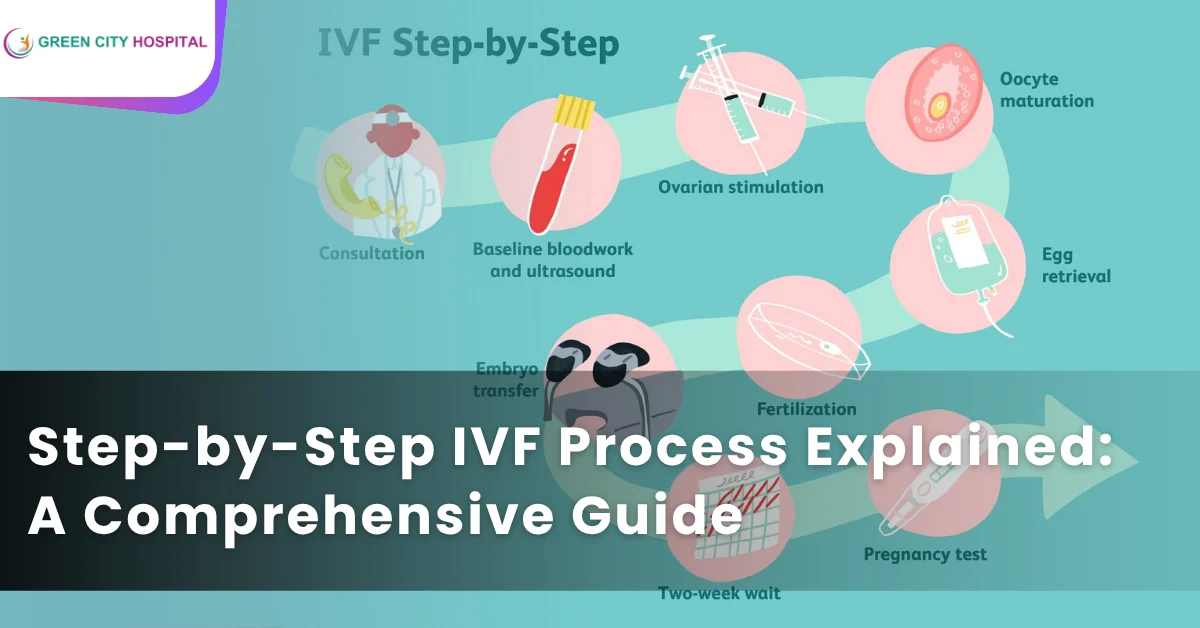
Phase 2: The Step-by-Step IVF Process
Once the diagnostics are complete and the woman’s menstrual cycle is mapped, the active IVF cycle begins. This usually spans about 4 to 6 weeks.
Step 1: Ovarian Stimulation (Days 1–12)
In a natural cycle, the ovaries typically release one egg. For IVF, we need multiple eggs to increase the chances of creating a healthy embryo.
- Medication: The patient is prescribed injectable hormonal medications (Gonadotropins) for about 8 to 14 days. These stimulate the ovaries to produce multiple follicles (the fluid-filled sacs containing eggs).
- Monitoring: This is a critical period involving frequent visits to the clinic. Doctors use Transvaginal Ultrasounds (TVS) and blood tests (Estradiol levels) to monitor the growth of the follicles and ensure the dosage is optimal.
- The Trigger Shot: Once the follicles reach the desired size (usually 18–20 mm), a “trigger shot” of Human Chorionic Gonadotropin (hCG) or a GnRH agonist is administered. This shot prepares the eggs for final maturation. Timing is everything here—the egg retrieval must happen exactly 34 to 36 hours after this injection.
Step 2: Egg Retrieval (Day 14 approx.)
Egg retrieval is a minor surgical procedure performed under light sedation or general anesthesia, meaning you won’t feel any pain.
- The Procedure: Using ultrasound guidance, a thin needle is passed through the vaginal wall into the follicles. A suction device gently removes the follicular fluid containing the eggs.
- Duration: The process takes about 20–30 minutes.
- Recovery: Patients usually rest for a few hours at the hospital and can go home the same day. Some mild cramping or spotting is normal.
Step 3: Sperm Collection
On the same day as the egg retrieval, the male partner provides a fresh semen sample. The lab “washes” the sperm, separating the high-quality, active sperm from the seminal fluid and debris. In cases of severe male infertility or if a fresh sample isn’t possible, frozen donor sperm or TESA/PESA (testicular sperm extraction) may be used.
Step 4: Fertilization (The Laboratory Stage)
This is where the “In Vitro” magic happens. There are two primary methods used in the lab:
- Conventional Insemination: The harvested eggs and healthy sperm are placed together in a Petri dish and incubated overnight. The sperm naturally penetrates the egg.
- ICSI (Intracytoplasmic Sperm Injection): A single healthy sperm is injected directly into a mature egg. This is highly effective for cases with low sperm counts or previous fertilization failures.
Step 5: Embryo Culture (Days 1–5)
The fertilized eggs (now called zygotes) are monitored by embryologists.
- Cleavage Stage (Day 3): The embryo has divided into about 6 to 10 cells.
- Blastocyst Stage (Day 5): The embryo has developed into a complex structure of about 100 cells. Many modern clinics prefer “Blastocyst Culture” as these embryos have a higher implantation success rate.
During this time, if the couple has opted for genetic testing, a few cells are biopsied from the embryo to check for chromosomal abnormalities.
Step 6: Embryo Transfer (Day 3 or 5)
This is the most anticipated step of the IVF process. It is a simple procedure, similar to a pap smear, and usually does not require anesthesia.
- The Transfer: A thin, flexible catheter containing the embryo(s) is passed through the cervix into the uterus under ultrasound guidance.
- Number of Embryos: To reduce the risk of multiple pregnancies (twins/triplets), doctors often recommend a Single Embryo Transfer (SET), especially in younger patients.
- The Rest: After the transfer, you may be asked to lie still for a short period, but “total bed rest” for weeks is a myth. You can return to light daily activities almost immediately.
Step 7: Luteal Phase Support and the “Two-Week Wait”
Following the transfer, the woman is prescribed progesterone (via injections, gels, or pills). This hormone thickens the uterine lining, making it more receptive to the embryo.
The period between the transfer and the pregnancy test is often called the “Two-Week Wait.” It is vital to manage stress during this time and avoid strenuous exercise or heavy lifting.
The Role of Technology in Indian IVF
In India, centers like Green City Hospitals are adopting global standards. Technologies like Time-Lapse Imaging (which allows embryologists to monitor embryos without removing them from the incubator) and Vitrification (advanced flash-freezing for eggs and embryos) have significantly boosted the success rates of the IVF process in India.
Success Rates: What to Expect?
It is important to be realistic. The success of IVF depends on several factors:
- Maternal Age: Women under 35 have the highest success rates.
- Cause of Infertility: Some conditions are easier to bypass than others.
- Lifestyle Factors: Smoking, obesity, and high stress can negatively impact outcomes.
In India, the average success rate per cycle ranges from 30% to 50%. While some couples conceive in the first cycle, others may require two or three attempts. Consistency and choosing a clinic with a high-end embryology lab are key.
Managing the Financial and Emotional Aspect
The IVF process in India is significantly more affordable than in Western countries, yet it remains a financial investment. Transparent pricing and counseling are hallmarks of a professional facility.
Moreover, the emotional toll can be heavy. Hormonal fluctuations from medications, combined with the anticipation of results, can lead to “IVF burnout.” Many leading hospitals now integrate psychological counseling into their fertility programs to support couples through the highs and lows.
Legal Landscape: The ART Act 2021
Patients should be aware that the IVF process in India is governed by the Assisted Reproductive Technology (Regulation) Act, 2021. This law ensures ethical practices, sets age limits for participants (typically up to 50 for women and 55 for men), and mandates the registration of all fertility clinics. Choosing a registered and compliant hospital is non-negotiable for your safety and legal protection.
Lifestyle Tips During Your IVF Journey
To optimize your chances during the IVF process, consider the following:
- Nutrition: Follow a Mediterranean-style diet rich in whole grains, lean proteins (like fish and lentils), and leafy greens.
- Supplements: Folic acid and Vitamin D are often recommended by Indian specialists.
- Hydration: Drink plenty of water, especially during the stimulation phase.
- Limit Caffeine: High caffeine intake has been linked to lower fertility rates.
- Avoid Self-Medication: Always consult your fertility specialist before taking any over-the-counter drugs.
Why Choose Green City Hospitals for Your IVF Journey?
Selecting the right partner for your fertility journey is the most crucial decision you will make. At Green City Hospitals, we combine clinical excellence with a compassionate, patient-first approach.
Our state-of-the-art laboratory, experienced team of reproductive endocrinologists, and transparent communication ensure that you are never alone in the IVF process. We understand the cultural and emotional nuances of Indian families and provide tailored treatments that respect your privacy and your dreams.
Conclusion
The IVF process is a testament to how far medical science has come. While it requires patience, resilience, and a bit of “medical help,” the end result—a healthy baby—is worth every step. By understanding the process, from the initial stimulation to the final embryo transfer, you empower yourself to take control of your reproductive health.
If you are ready to start your journey or have more questions about how IVF can help you, reach out to a specialist today. Parenthood is a beautiful destination, and the right guidance can make the journey a whole lot smoother.
Frequently Asked Questions (FAQs)
- Is the IVF process painful? Most stages involve minimal discomfort. Ovarian stimulation involves small injections, and egg retrieval is done under sedation.
- How long does one full IVF cycle take? From the start of stimulation to the pregnancy test, a typical cycle takes about 4 to 6 weeks.
- Can I work during the IVF treatment? Yes, most women continue working throughout the process, though you will need a day off for egg retrieval and perhaps a day of rest after the transfer.
- Is IVF a “last resort”? Not necessarily. For certain conditions like bilateral tubal blockage, IVF is often the first-line treatment.
- Are IVF babies different from naturally conceived babies? No. Extensive research shows that children born via IVF are as healthy and normal as those conceived naturally.


